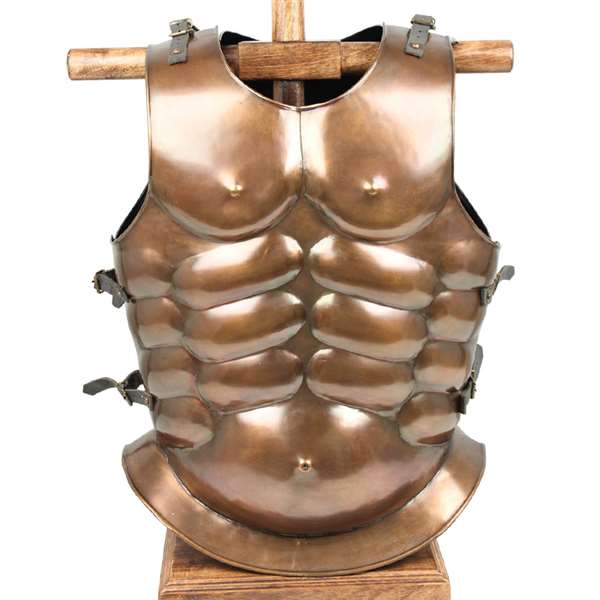
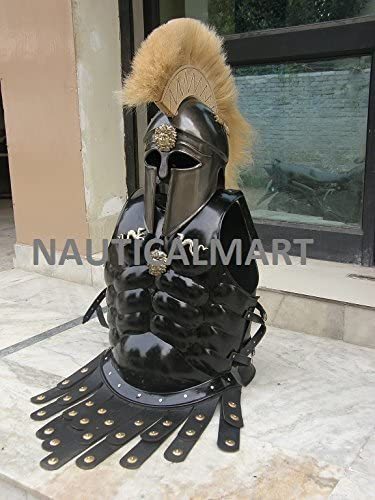
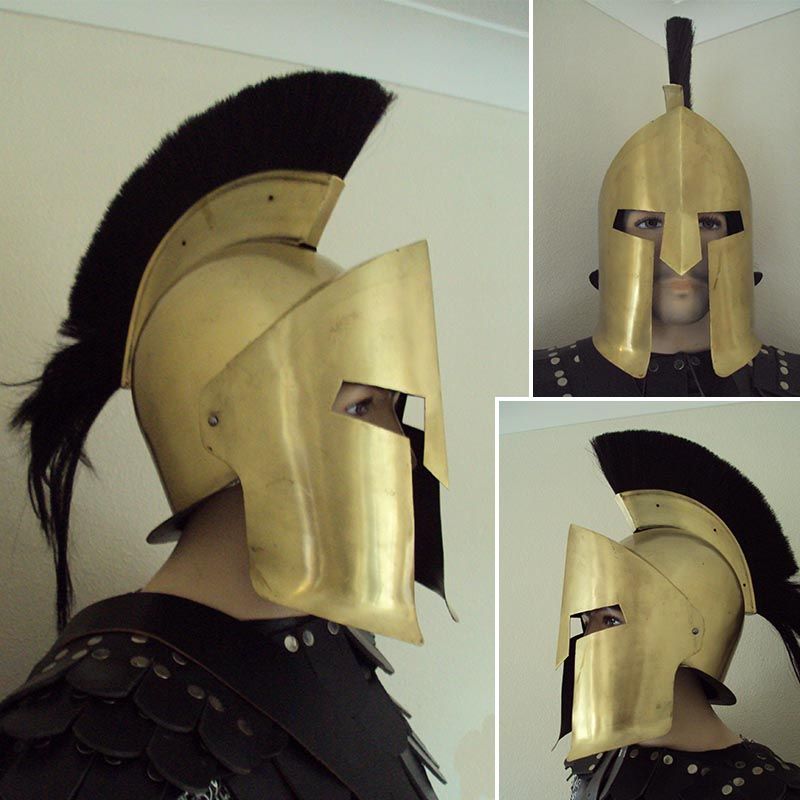
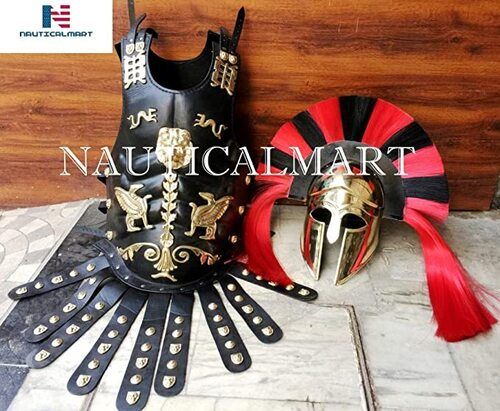
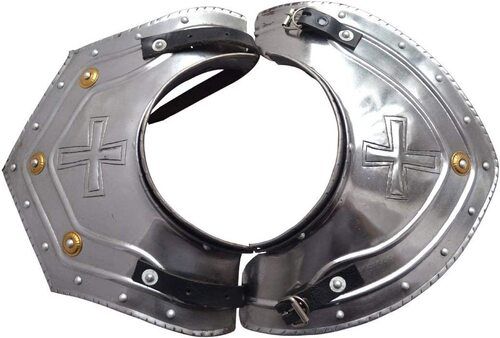
MEDIEVAL COSTUME : Although the heavy muscle cuirass would have afforded sturdy protection, in practical terms it might have been too cumbersome, not to mention cost prohibitive, for regular use by an infantryman. And more for the decoration in your home, office or showroom. Its development and use spanned several centuries, reflecting shifts in military, political, and cultural values. MAKING OF ARMOUR : It is a very strong material, but very lightweight and comfortable to wear. The armor was often richly decorated with mythological and political motifs — such as gods bestowing power or scenes of Roman victory — reinforcing imperial ideology. Forged from 18-gauge mild steel, this helmet combines strength and authentic Roman aesthetics, complete with side cheek guards, a crest-ready top mount, and a... UsageMost commonly seen in statues and reliefs (e., g. All our Cuirasses are designed to mimic an idealized human physique. It was more symbolic and ceremonial than utilitarian in many cases, emphasizing status, heroism, and idealized masculinity. The Roman muscle cuirass (also known as a thorax or heroic cuirass) was a type of body armor worn primarily by high-ranking Roman officers, generals, and emperors during the Roman Republic and early Empire. During the Roman Empire, the muscle cuirass gained strong symbolic significance. GREEK MUSCLE ARMOUR CUIRASS: Our Brands Cuirasses were cast in two pieces, the front and the back, then hammered. It continued to be used in ceremonial or theatrical contexts, particularly for depictions of emperors, gods, and heroes. The muscle cuirass became an enduring symbol of military authority and idealized masculinity. Emperors like Augustus were depicted wearing it in statues to project strength, divinity, and legitimacy (e., g. While functional in battle, it was primarily worn by commanders and elites to showcase rank and divine favor. Greeks idealized the human form; the cuirass mimicked the physique of heroic warriors and gods. the Augustus of Prima Porta statue). Its influence is visible in Renaissance art, neoclassical sculpture, and even modern film costumes portraying ancient leaders and heroes. Griekse Spier Armor Set Met Korinthische Helm Authentic Corinthian Style: Inspired by ancient Greek Corinthian helmets, traditionally worn by hoplite warriors in the 7th-4th centuries BC. Full Wearable Armor Greek Corinthian Helmet Nauticalmart Armor NauticalMart Corinthian Helmet Brass With Red Plume - Fully Wearable Medieval Knight Spartan LARP Armor Historical Reenactment Helmet Eagles Helmet Costume ”CoverageCovered the chest and back, often in two pieces hinged or tied at the sides and shoulders. By the late Empire, it was mostly a symbolic garment seen in art, sculpture, and ceremonial garb. DesignSculpted to imitate the idealized male torso, complete with defined pectorals, abdominal muscles, and sometimes nipples — hence the name “muscle cuirass. The main purpose of the highly figured cuirass was to impress, and it was likely reserved for military reviews and parades. the Augustus of Prima Porta), emphasizing the wearer’s martial prowess and leadership.